[Career] Strategies for Successful Career Adaptation and Growth for Early-Career Professionals (1-3 Years)


Table of Contents
The first three years of a career are crucial for building the foundational skills and knowledge necessary for long-term success. The experiences and lessons learned during this period have a lasting impact on one’s career trajectory. Therefore, it is essential to quickly understand and adapt to the organization’s structure, culture, and job processes. This phase is also a time to explore different experiences, identify areas of interest, and establish long-term career goals.
1. Job Adaptation and Strengthening Core Competencies
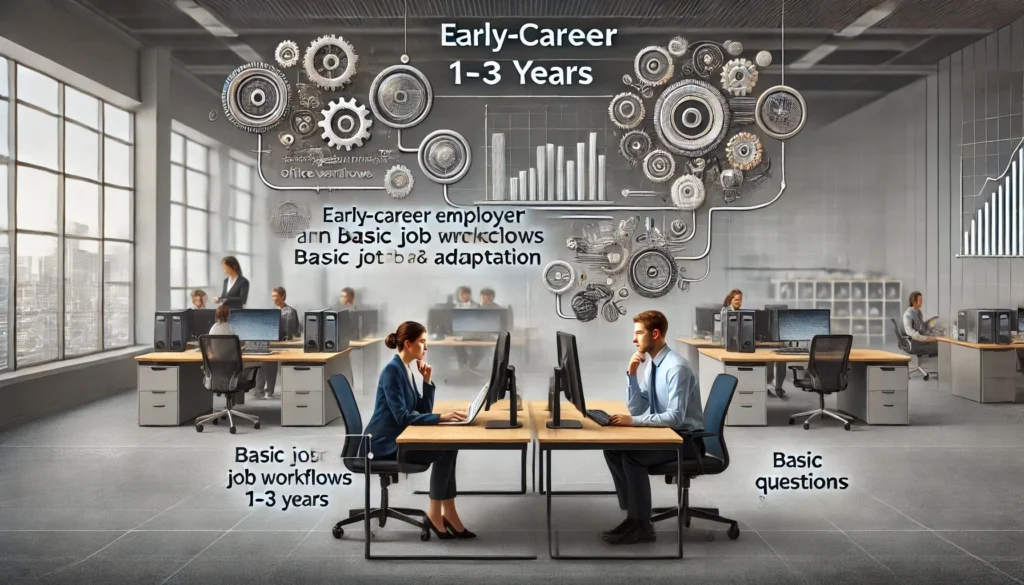
At the beginning of a career, it is natural to have limited knowledge of the job. Encountering unfamiliar tasks and processing large amounts of information can be overwhelming. The key to overcoming this challenge is to focus on strengthening core competencies as quickly as possible.
Mastering Basic Tasks
– Each role has essential processes that must be understood and mastered. Repetitive practical experience helps in developing these skills. For example, in project management, it is crucial to quickly acquire skills such as scheduling, report writing, and communication.
Improving Work Efficiency
– While work may be slow initially, it is important to identify the workflow and key points to gradually improve efficiency. Establishing a personal work routine and managing time effectively can help prioritize tasks and increase productivity.
Emphasizing On-Site Experience
– In practical fields such as manufacturing, logistics, and construction, on-site experience is invaluable. Direct exposure to real-world challenges enhances one’s understanding of the job beyond theoretical knowledge gained in the office.
2. Maintaining a Proactive Attitude Toward Learning and Asking Questions

A proactive approach to learning during the early stages of a career plays a vital role in future growth. Maintaining a curious mindset and asking questions actively is essential.
Asking Questions When Unsure
– Since it is impossible to know everything initially, it is important to ask questions without hesitation when encountering unfamiliar situations. Seeking knowledge from experienced supervisors and colleagues can save time and accelerate learning.
Utilizing Feedback
– Feedback from supervisors and colleagues should be viewed as an opportunity for improvement rather than mere criticism. After receiving feedback, consider ways to improve and apply those lessons in future tasks.
Self-Directed Learning
– Taking advantage of company-provided training programs and external courses can help enhance one’s skills. Proactively studying specialized knowledge required for the job and creating a personal learning plan can accelerate growth.
3. Setting Career Goals

Setting long-term career goals during this period is crucial. Through diverse experiences, individuals can explore their interests and determine the direction they want their careers to take.
Exploring Different Experiences
– Early in a career, it is beneficial to experience a variety of tasks rather than focusing on a single area. This exploration helps identify tasks that align with one’s strengths and interests. For example, participating in cross-functional projects involving planning, sales, and research and development can provide valuable insights.
Identifying Strengths
– While performing various tasks, it is essential to recognize personal strengths and areas for improvement. This self-awareness helps determine which skills to further develop and which roles to pursue long-term.
Establishing Career Goals
– Based on the exploration process, setting specific career goals is important. Clear goals increase motivation and help maintain a sense of direction, even when considering job changes or internal transfers.
4. Points to Be Cautious About
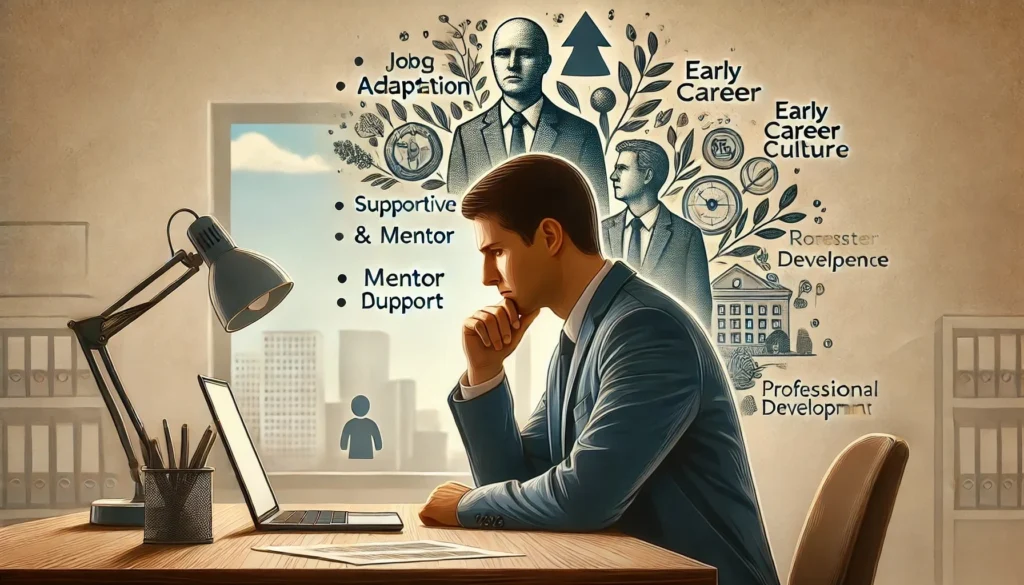
One common challenge faced by early-career professionals is dealing with uncertainty and the temptation to change jobs frequently. However, frequent job changes during this period can negatively impact long-term career development.
Risks of Frequent Job Changes
– It takes time to adapt to a new job and workplace. Even if the work is challenging or the organizational culture is difficult to adjust to, it is important to stay for at least one to two years to gain valuable experience. Excessive job changes can create a negative impression on resumes and hinder long-term career growth.
Maintaining Responsibility and Integrity
– While mistakes are inevitable in the early stages of a career, it is essential to demonstrate responsibility and commitment. Taking ownership of one’s tasks and seeing them through to completion helps build trust within the organization.
Understanding Organizational Culture
– In addition to job performance, understanding the organization’s culture and building positive relationships with colleagues is crucial. In collaborative environments, effective communication and teamwork have a significant impact on work performance.
5. Laying the Foundation for Long-Term Growth

The foundational skills and experiences developed during the first three years serve as a stepping stone for future career growth. It is essential to approach this period strategically by strengthening core competencies, gaining diverse experiences, and developing expertise. Careful consideration when changing jobs and setting long-term career goals helps maintain a clear sense of direction.
A successful career is built on the accumulation of small achievements and continuous learning. The efforts made during this period will create lasting positive changes throughout one’s career.
![[Career] Can a Bad Boss Make You Stronger? Turning the Worst Experience into a Growth Opportunity](https://ota2z.com/wp-content/uploads/2025/03/DALL·E_2025-03-08_12.59.09_-_An_illustration_of_an_employee_looking_at_a_ter-768x439.webp)


![[Career] Career Transition and New Challenge Strategies for Professionals with 16+ Years of Experience](https://ota2z.com/wp-content/uploads/2025/03/DALL·E_2025-02-04_13.39.38_-_An_image_of_a_senior_professional_16_years_of-768x439.webp)

