[Politics] “When Politics Falter, Cybersecurity Crumbles? The Cybersecurity Reality We Must Prepare For Now”


Table of Contents
1. When Politics Falter, Cybersecurity Crumbles? The Current Cybersecurity Reality We Must Prepare For
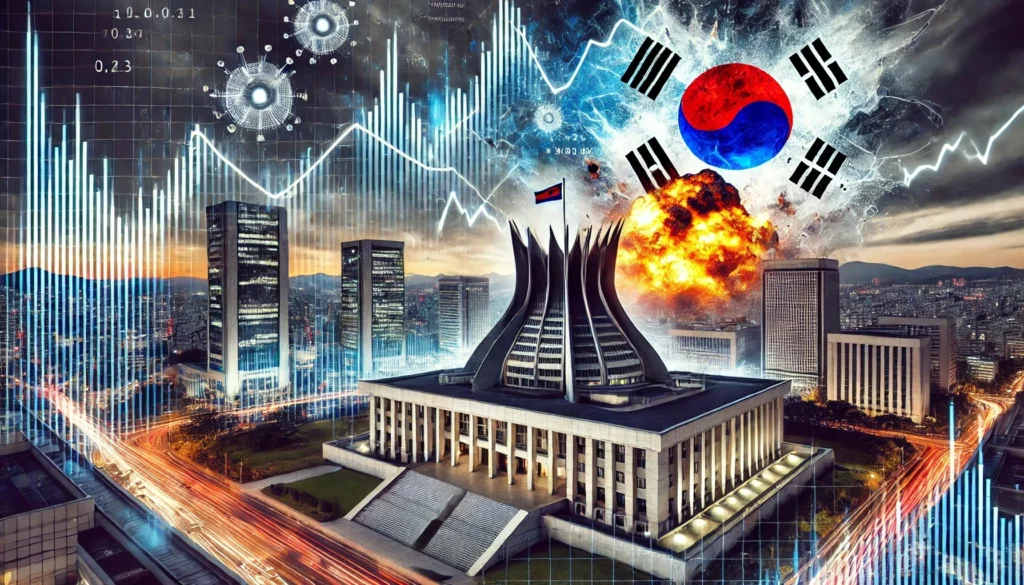
In 2025, South Korea is experiencing one of its most politically and economically unstable periods in recent history. Discussions of President Yoon Suk-yeol’s impeachment, shifts in parliamentary power, and deepening ideological conflicts have made political turbulence a daily reality. Compounded by global economic downturns, high interest rates, declining exports, and youth unemployment, overall national uncertainty is intensifying.
In such an environment, most citizens and businesses focus on immediate survival and economic hardships—cybersecurity naturally takes a backseat.
However, cyber threats do not pause during political or economic crises. On the contrary, times of chaos present golden opportunities for attackers. Political instability appears as a national vulnerability, and economic difficulties reduce cybersecurity investments in organizations. Policy vacuums, stagnating technology development, workforce attrition, and neglected OT system vulnerabilities can threaten national infrastructure and public safety.
Particularly in sectors such as manufacturing, energy, and critical infrastructure—which rely heavily on Operational Technology (OT)—cyber risks linked to political and economic instability become even more severe. This article analyzes the impact of South Korea’s instability on the cybersecurity industry and explores strategic responses for businesses and society.
2. The Correlation Between Political-Economic Instability and Cybersecurity

1) Political Instability and Cybersecurity Landscape
Political chaos disrupts the continuity of policymaking and execution. Cybersecurity depends heavily on systematic legislation, consistent budgets, and government-led initiatives. Several risks are now becoming evident:
- Unstable Cybersecurity Budgets: Parliamentary gridlock and administrative vacuums delay or reduce cybersecurity funding, halting system upgrades, solution replacements, and infrastructure maintenance.
- Collapse of National Policy Continuity: Existing frameworks such as K-NIS, K-CERT, and digital security strategies may be repealed or suspended under regime changes.
- Public Sector Project Disruptions: Government-led cybersecurity projects are delayed or canceled, reducing business opportunities across the industry.
2) Economic Instability and Declining Cyber Demand
Economic slowdown forces companies to treat cybersecurity as a cost rather than an investment, triggering a vicious cycle:
- Security Budgets Deprioritized: Executives delay or cut cybersecurity investments to reduce costs.
- Workforce Reduction and Brain Drain: Cybersecurity personnel layoffs cause gaps in security, and top talent may move abroad.
- Technology Adoption Delays: Deployment of next-gen technologies like AI detection systems, XIoT security, and threat intelligence platforms are suspended.
3) Rise in Geopolitical Cyber Threats
Political and economic turmoil is seen by foreign threat actors as a window of opportunity. Nation-state adversaries such as North Korea, China, and Russia may escalate cyberattacks.
- Increased APT attacks on national infrastructure (power, telecom, ports)
- Spear phishing campaigns targeting government agencies
- Hack-and-leak tactics aimed at political destabilization and misinformation
3. Impact Assessment on the Cybersecurity Industry

| Sector | Specific Impact | Risk Level |
|---|---|---|
| Security Solution Market | Budget cuts, halted technology advancement | High |
| Security Services Market | Reduced demand for consulting and outsourcing | Medium |
| OT/ICS Security | Sector-specific investment cuts, unmanaged vulnerabilities | Very High |
| Talent Supply | Expert attrition, reduced new hiring | Medium |
| Technology Development | Suspended R&D, decreased startup investment | High |
| International Cooperation | Weakened global intelligence-sharing networks | Medium |
4. Strategic Response Recommendations

1) Autonomous Security Internalization
- Strengthen internal security governance
- Establish security investment ROI assessment systems
- Apply international frameworks (ISO 27001, IEC 62443, NIST CSF)
2) Private Sector-Led Policy Supplements
- Define voluntary guidelines through industry bodies (e.g., KISIA, OT Security Forum)
- Activate Threat Intelligence Sharing Networks
3) Crisis Response and Resilience Enhancement
- Conduct cyber crisis scenario-based simulations
- Expand cyber insurance adoption
- Build a pool of specialized incident response personnel
4) Talent Retention and Development
- Launch reskilling programs during crisis periods
- Build academic-industry cooperative ecosystems for security professionals
5) Continuous Investment in Future Technologies
- Focus investments on XIoT security, AI-based detection, and cloud security
- Develop cybersecurity export strategies to mitigate domestic demand shrinkage
5. Conclusion – Cybersecurity Must Not Be Deprioritized
Photo caption: [Insert a relevant image description here]
Cybersecurity is not just a subdomain of IT—it is the foundation of business continuity, the protection of national infrastructure, and a safeguard for citizens. As politics falter and the economy weakens, cybersecurity must become even more deeply rooted.
What’s needed now is not a wait-and-see attitude for government policy, but proactive, autonomous security integration by businesses and industries. Future-oriented capabilities for AI, OT, and IoT threats must be strengthened now. Those who endure this crisis with strong cybersecurity will emerge stronger than ever.
![[OT Sec] The Importance of OT Security and Its Industrial Applications](https://ota2z.com/wp-content/uploads/2025/02/DALL·E_2025-02-03_10.21.22_-_A_modern_logistics_center_with_automated_convey-768x439.webp)
![[Career] Career Transition and New Challenge Strategies for Professionals with 16+ Years of Experience](https://ota2z.com/wp-content/uploads/2025/03/DALL·E_2025-02-04_13.39.38_-_An_image_of_a_senior_professional_16_years_of-768x439.webp)
![[OT Sec] Workflow of an OT/ICS Security Consultant](https://ota2z.com/wp-content/uploads/2025/02/DALL·E_2024-11-19_21.42.50_-_A_professional_illustration_showing_an_OT_ICS_s-768x439.webp)
![[Politics] Will Cybersecurity Be Shaken if Trump Returns? Survival Strategies for the Security Industry in a Time of Global Economic Turbulence](https://ota2z.com/wp-content/uploads/2025/03/DALL·E_2025-03-15_10.44.23_-_A_conceptual_image_of_global_economic_instabili-768x439.webp)

