[OT Sec] “A Single Smart Factory Hack Can Cost Billions… Why OT Security is Imperative Now”


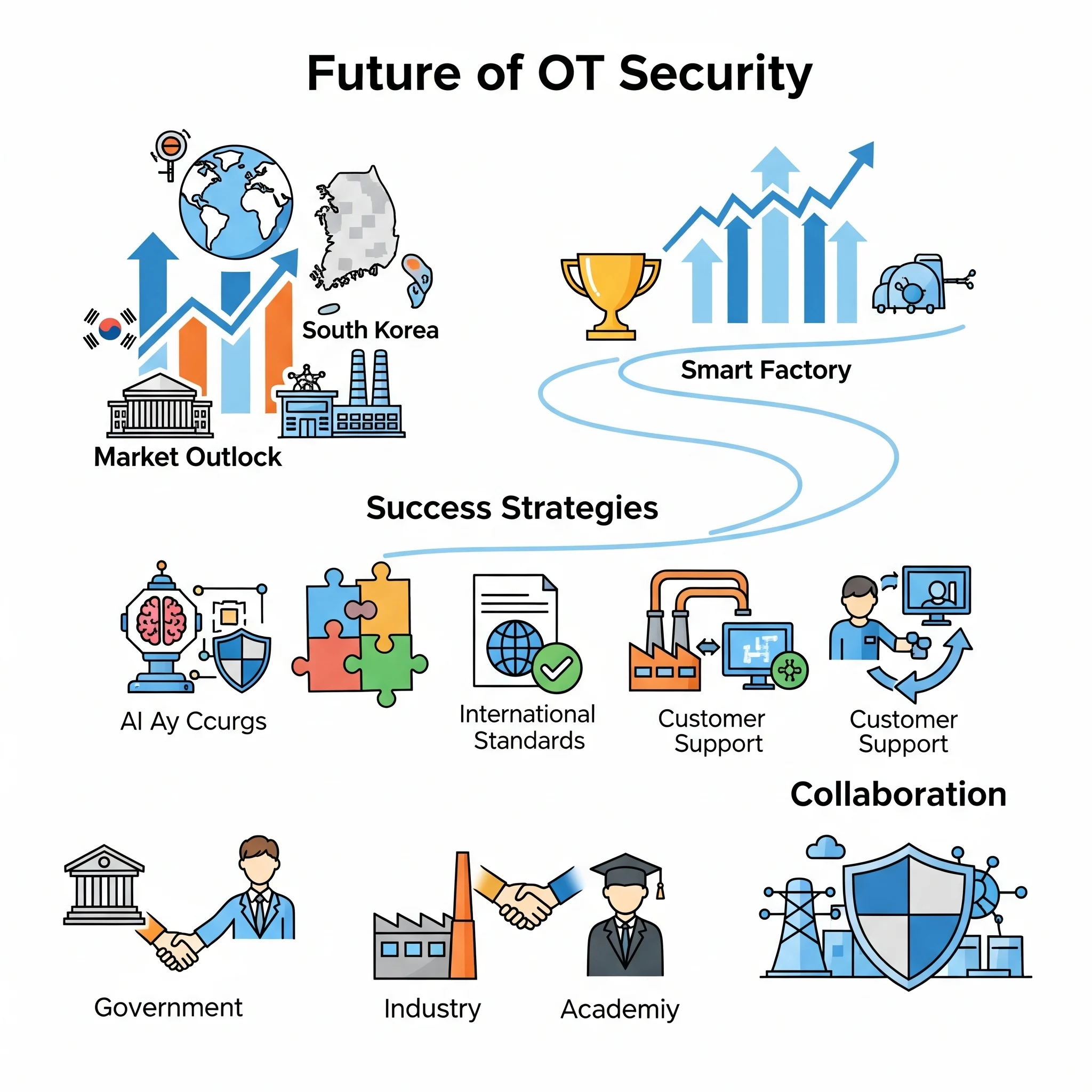
🚀 The Current State and Future Vision of South Korea’s OT Security Industry In the era of digital transformation, we provide a comprehensive analysis of the present and future of the Operational Technology (OT) security market, which is gaining prominence with the rise of smart factories and the Fourth Industrial Revolution.
📖 Introduction: Why is OT Security in the Spotlight Now?
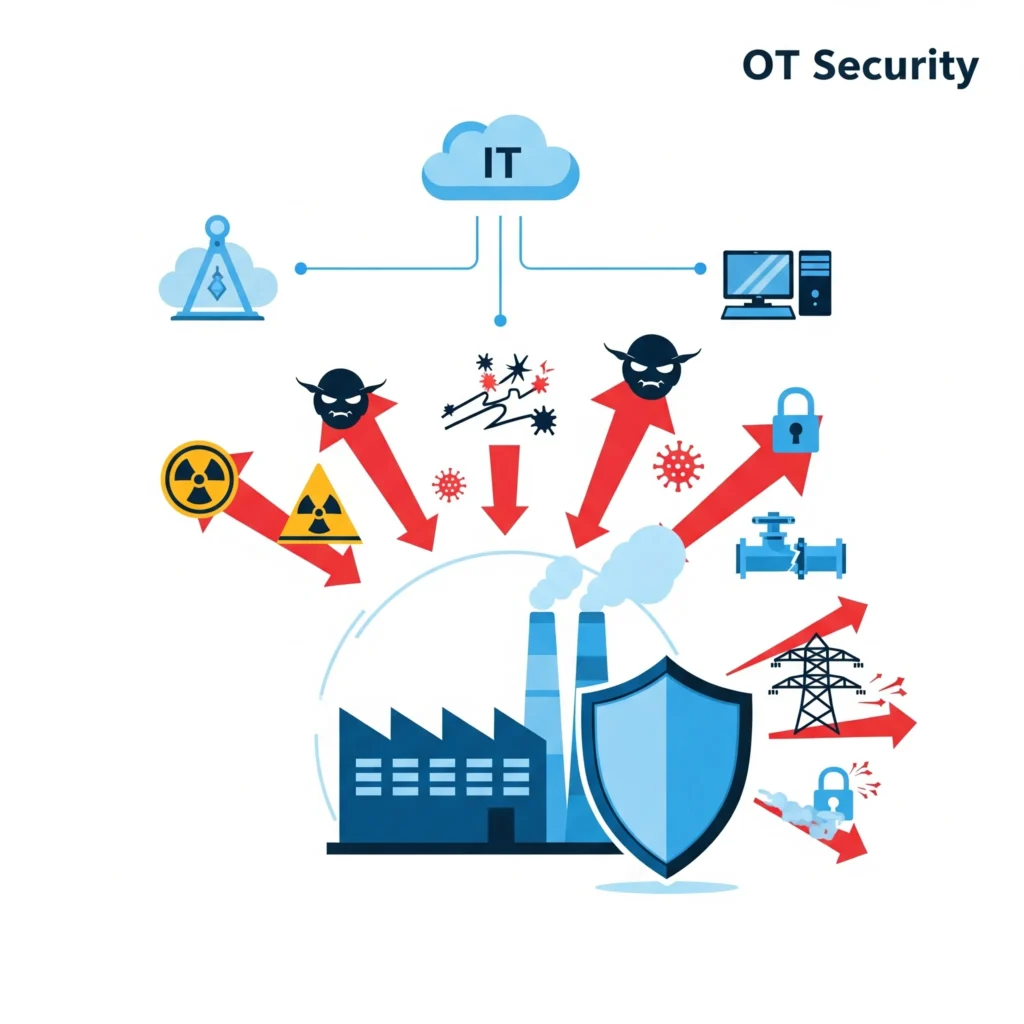
The acceleration of digital transformation and the Fourth Industrial Revolution is significantly changing the Operational Technology (OT) environment. Factories and industrial facilities, which once operated on closed, air-gapped networks, are now connected to IT networks, exposing them to new security threats.
🎯 Key Incidents Highlighting the Importance of OT Security:
- 2010: Stuxnet attack on Iranian nuclear facilities (Boan News, 2024)
- 2015: Hacking of Ukraine’s power grid (Boan News, 2024)
- 2021: Colonial Pipeline ransomware attack in the U.S. (Boan News, 2024)
These incidents revealed that OT security is not merely an IT issue but a critical matter directly linked to national security and industrial safety (Computerworld, 2020). In South Korea, 2021 is regarded as the inaugural year for OT security. Driven by the proliferation of smart factories and the government’s Digital New Deal policy, the sector is poised for explosive growth (DailySecu, 2020).
📊 1. Rapid Growth and Global Outlook of the OT Security Market
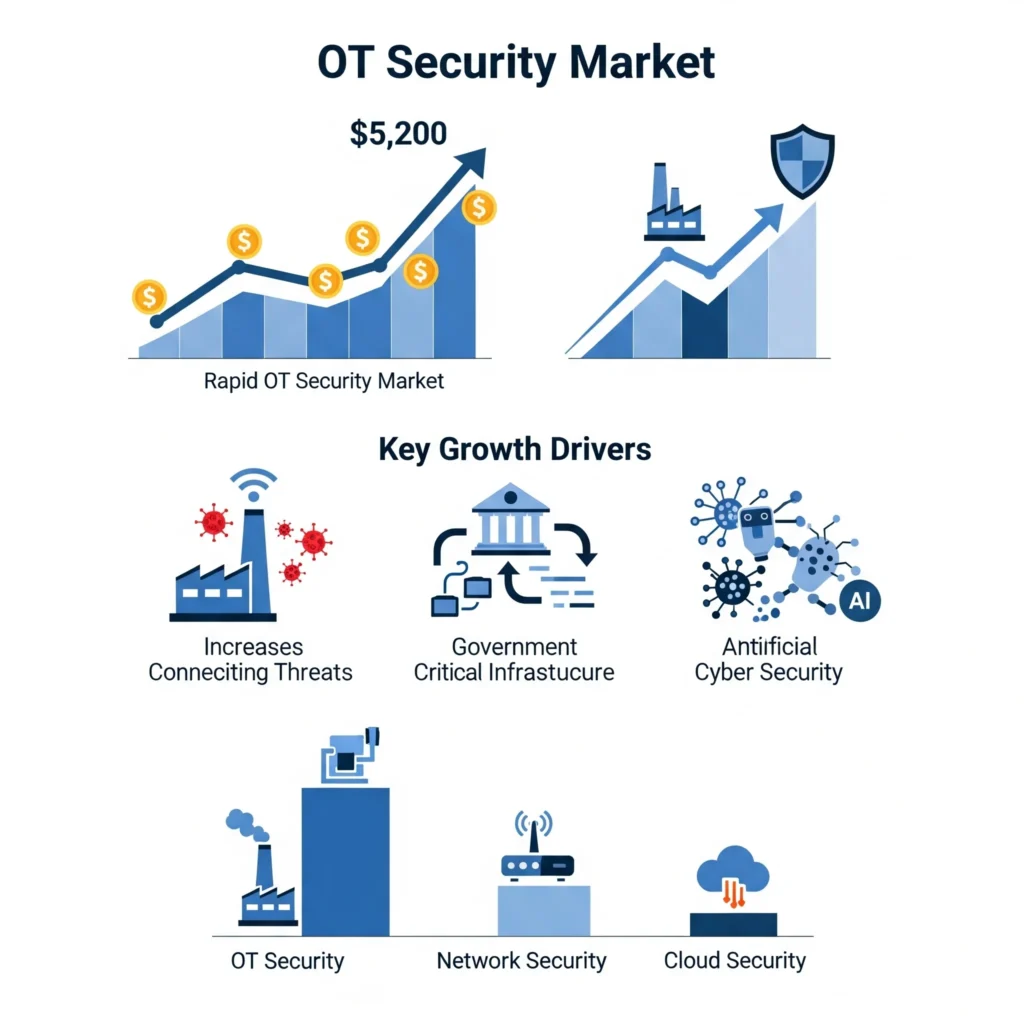
🌍 Global Market Outlook According to a recent report by MarketsandMarkets (Techworld News, 2024):
| Year | Market Size | Growth Rate (CAGR) |
|---|---|---|
| 2024 | $20.7 billion USD (approx. 27 trillion KRW) | – |
| 2029 | $44.9 billion USD (approx. 60 trillion KRW) | 16.8% |
Sheets로 내보내기
💡 Noteworthy Point: The OT security market’s growth rate (16.8%) is 1.5 times faster than the overall cybersecurity market (11.44%)! (Mordor Intelligence, 2024)
🇰🇷 Domestic Market Status According to Frost & Sullivan (Computerworld, 2020):
- Domestic OT/ICS Market: Valued at 93 billion KRW.
- Expected Growth Rate: Over 20%.
- Asia-Pacific Region: Expected to grow by over 30%.
Research and Markets also predicted the domestic ICS security market would reach 91.3 billion KRW (Computerworld, 2020).
🚀 3 Key Growth Drivers:
- Smart Factory Proliferation: The shift from closed networks to IT connectivity expands the attack surface (Computerworld, 2020).
- Increase in State-Sponsored Attacks: Supply chain attacks cause immense damage (EGLOO Corporation, 2024).
- Advancement of AI Technology: The growing sophistication of cyberattacks increases the need for specialized security solutions (SK Shieldus, 2024).
According to Fortinet, the global IoT/OT security market was expected to reach approximately $19 billion USD (approx. 22 trillion KRW) in 2022, surpassing the network security market ($18 billion) and doubling the cloud security market ($9 billion) (Computerworld, 2020).
🏭 2. Market Growth Driven by Government Policy and Smart Factory Expansion
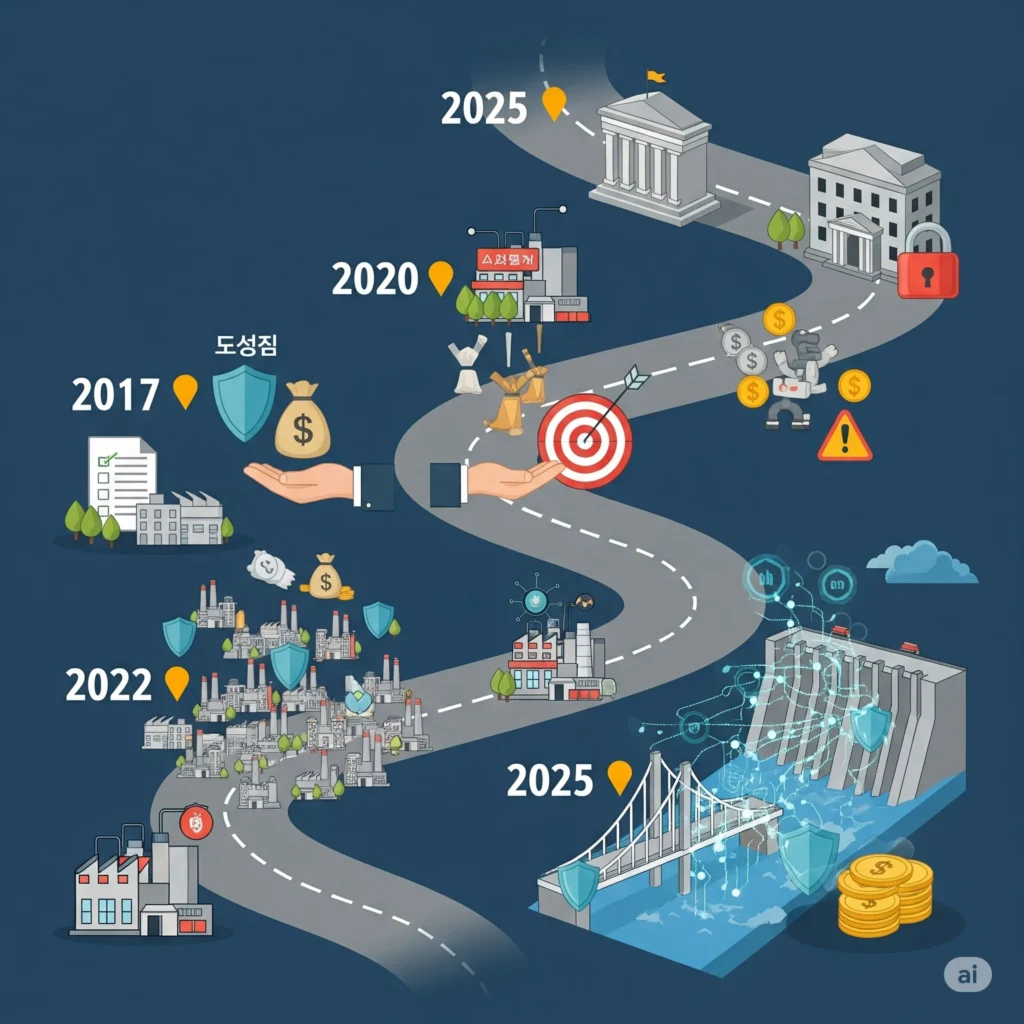
📅 Key Policy Timeline:
- 2017 📋 “Smart Factory Information Leakage Prevention Guide”
- KISA provided a systematic roadmap for OT security adoption (LG CNS Blog, 2021).
- Presented 10 core security elements (IT Lab, 2018).
- 2020 💰 Expansion of Support for Security Solutions
- Before: Support was limited to security consulting.
- After: Support expanded to include the implementation of security solutions (DailySecu, 2020).
- 2022 🎯 Goal of 30,000 Smart Factories
- Plan to establish 10 smart industrial complexes (Boan News, 2022).
- Provided 300 billion KRW in dedicated loans for smart factories (Boan News, 2022).
- 2025 🏗️ Completion of SOC Digitalization
- Investment of 15.8 trillion KRW to build safe and smart social overhead capital (DailySecu, 2020).
- OT security elements became mandatory in all related projects (DailySecu, 2020).
💡 Policy Effects: The government’s plan to build 30,000 smart factories and 10 smart industrial complexes by 2022, along with the establishment of the “SME Smart Manufacturing Innovation Planning Group” by the Ministry of SMEs and Startups to act as a policy control tower, has been pivotal (Boan News, 2022). The 2018 ransomware incident at Taiwan’s TSMC, in particular, significantly raised awareness in the manufacturing sector about the economic damage and safety risks of production stoppages (Boan News, 2022; LG CNS Blog, 2021). Active government support has accelerated the adoption of smart factories by small and medium-sized manufacturers, improved corporate awareness of OT security, and laid the groundwork for building systematic security infrastructure (DailySecu, 2020).
🏢 3. Domestic OT Security Ecosystem and Key Player Analysis
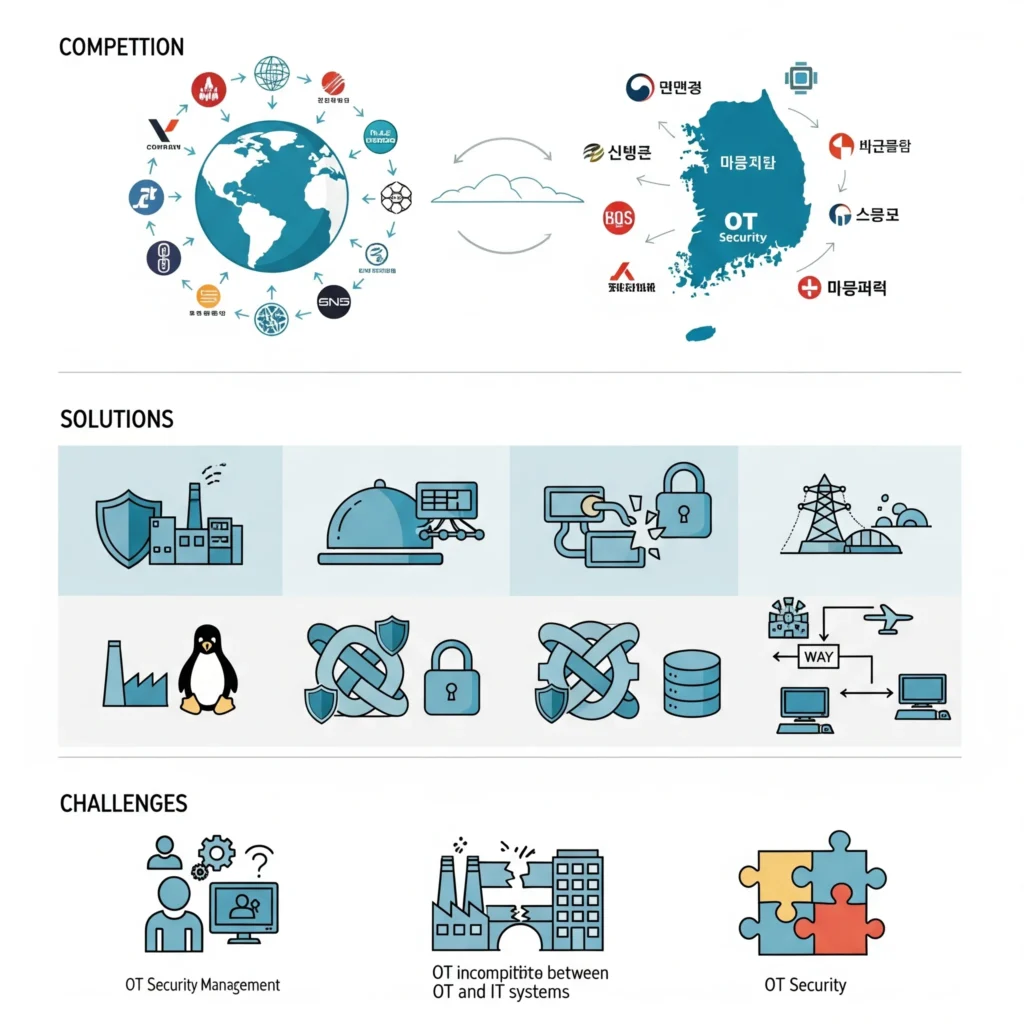
🌍 Competitive Landscape: Global vs. Domestic Companies
- Global Players:
- Fortinet, Darktrace, Palo Alto Networks
- Check Point, Splunk, Forescout (Computerworld, 2020)
- Major Domestic Players:
- AhnLab, Secu-i, SK Shieldus (formerly SK Infosec)
- Wins, EGLOO Security, Hunesion (SecurityFact, 2025)
According to Bang Hyuk-jun, CEO of Kuntech, a partner of ICS security firm Claroty, “Despite being an early-stage market, both the domestic and global OT security markets have numerous competitors” (Computerworld, 2020).
🛡️ Overview of Major Solutions:
- AhnLab – Specialized Security for Special-Purpose Systems
- ‘AhnLab EPS 2.0’ expanded from Windows to Linux (SecurityFact, 2025).
- Enhanced operational functions for closed-network equipment.
- Advanced central monitoring and on-site response capabilities.
- Secu-i – Integrated OT Security Platform
- Integrated network and device security (SecurityFact, 2025).
- Provides visibility and monitoring for OT environments.
- Specialized in responding to ransomware and malware.
- Fortinet – OT-Aware Security Fabric
- Signatures for over 3,000 OT applications (Boan News, 2024).
- Supports 600 threat signatures (Boan News, 2024).
- Provides Zero-Trust Access.
- Hunesion – Network Linkage Specialist
- No. 1 in the domestic network linkage market (Boan News, 2024).
- Provides physical one-way communication security.
- Solutions specialized for OT environments.
- nNetDiode – Physical One-Way Transmission Device
- Successfully developed and localized in 2014 as a government project (Boan News, 2024).
- First in Korea to receive CC certification in 2016 (Boan News, 2024).
- Used in critical infrastructure such as nuclear power plants, power generation, water resources, aviation, and transportation (Boan News, 2024).
⚠️ Key Challenges: The domestic information security market grew from approximately 2.08 trillion KRW in 2015 to an estimated 5.62 trillion KRW in 2022, with a rapid average annual growth rate of 15% (Aju Business Daily, 2024). However, challenges remain:
- Shortage of Expert Personnel: An absolute lack of professionals with converged IT-OT capabilities (Boan News, 2024).
- Gap in Technical Understanding: IT security companies often lack a deep understanding of OT environments (Boan News, 2024).
- Collaborative Ecosystem: A need to establish an integrated management framework (DailySecu, 2020).
🤖 4. The New Threat Landscape and the Rise of AI-Based Cybersecurity
🔥 Key Threat Trends for 2025:
- 🦠 Evolution of Ransomware
- Shift from simple file encryption to multi-faceted extortion strategies (SK Shieldus, 2025).
- Combines data theft, threats to partners, and DDoS attacks (SK Shieldus, 2025).
- Aimed at maximizing financial gain.
- 🎭 Surge in AI-Exploited Attacks
- Misuse of deepfakes and voice synthesis technology (CIO, 2025).
- Automated phishing attacks (Boan News, 2025).
- Manipulation of AI agents to cause system overloads (CIO, 2025).
- 🕳️ BYOVD (Bring Your Own Vulnerable Driver) Attacks
- Disabling security solutions using vulnerable drivers (SK Shieldus, 2025).
- Evading detection by exploiting native OS tools.
- ⚡ Increase in 1-Day Vulnerability Exploits
- Targeting unpatched systems instead of zero-day vulnerabilities (SK Shieldus, 2025).
- Rapid exploitation of known vulnerabilities.
📊 2025 Cyber Threat Status: According to Chainalysis’s ‘Crypto Crime Report,’ damages from ransomware exceeded $1 billion USD (over 1.3 trillion KRW) in 2023 (Techworld News, 2024).
| Metric | Figure | Meaning |
|---|---|---|
| Companies Lacking Data Control | 65% | Most companies have security blind spots (News1, 2025). |
| Average Time for AI Hacking | 5 hours | The speed of attacks has dramatically decreased (Nate News, 2025). |
| Daily Cyberattacks (in South Korea) | 1.5 million | A 200,000 increase in attacks originating from North Korea (EGLOO Corporation, 2024). |
Sheets로 내보내기
🛡️ Advancements in AI-Based Defense Technologies:
- AI-Based EDR Solutions
- Shift from pattern-based to behavior-based anomaly detection (SK Shieldus, 2025).
- Real-time threat learning and adaptation.
- Self-Learning SOAR
- AI learns threat patterns autonomously (Boan News, 2025).
- A constantly adapting defense platform.
- Digital Twin-Based Training Systems
- Threat simulation in a virtual environment (Boan News, 2025).
- Federated AI defense training systems.
According to IBM, the U.S. has had the highest data breach costs for 14 consecutive years ($9.36 million), followed by the Middle East and Germany (Seoul Economy, 2025).
🤝 5. Building a Collaborative Ecosystem and the Need for Integrated Security
🎯 Why is an Integrated Approach Necessary?
Moon Gwi, an executive at Fortinet Korea, emphasized, “Effective and practical integrated OT security is a problem that is difficult for a single security company to solve. It is only possible through the joint collaboration of security operations centers, OT operators, support partners, manufacturers, security vendors, consulting firms, and SI companies” (DailySecu, 2020).
Practical Constraints:
- Automation devices like PLCs are often chosen under the lead of SI companies (Boan News, 2024).
- Products from various manufacturers with different security technologies are mixed together (Boan News, 2024).
- A structure where it’s difficult for clients to specify security solutions directly.
🔗 Components of the Collaborative Ecosystem:
- Key Stakeholders:
- Security Operations Center (SOC) + OT Operators
- Manufacturers + Security Vendors
- Consulting + SI Companies + Partners (DailySecu, 2020) 💡 Key to Success: Market expansion through global cooperation models rather than mutual competition (DailySecu, 2020).
🏗️ Integrated Security Architecture (Based on IEC 62443): The ISA-99 committee and the IEC 62443 industrial cybersecurity framework identify a logical framework for securing industrial control systems (LG CNS Blog, 2021).
- Level 4-5: Enterprise Zone
- ERP, enterprise-wide integrated systems (IT Lab, 2018).
- Level 3.5: DMZ
- Industrial firewalls, UTM devices (DailySecu, 2020).
- Level 3: Control Zone
- Management of control system operations (LG CNS Blog, 2021).
- Level 0-2: Industrial Zone
- Sensors, PLCs, SCADA systems (LG CNS Blog, 2021).
🌟 3 Core Functions of an Integrated Solution:
- 🔗 Network Segmentation
- Zero Trust-based access control (Doosan Digital Innovation, 2024).
- Granular access based on permissions.
- 👁️ Integrated Monitoring
- Ensuring real-time visibility (Computerworld, 2020).
- Early detection of anomalies.
- ⚡ Rapid Response
- Automated incident response.
- Minimizing recovery time.
📋 Compliance with International Standards: KPMG’s Cybersecurity Services team provides consulting based on the following standards to achieve security across the entire process of product design, production, operation, and maintenance (SecurityFact, 2025):
- IEC 62443: International standard for industrial cybersecurity.
- ISA-99: Framework for industrial control system security.
- NIST, NERC-CIP, ENISA: Linkage with various national security standards.
🎯 Conclusion: Future Outlook and Success Strategies for OT Security
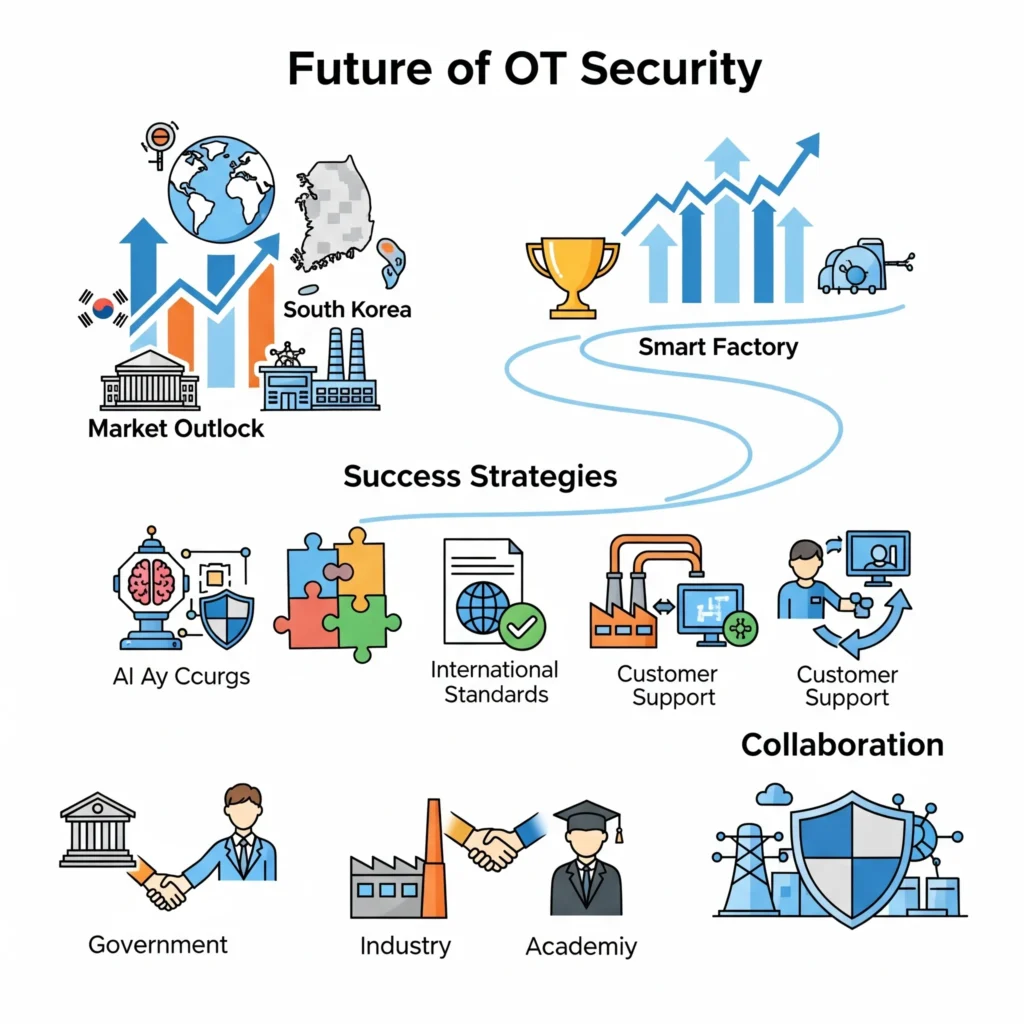
📈 Market Outlook Summary:
- Global Market: Expected to grow to 60 trillion KRW by 2029 (Techworld News, 2024).
- Domestic Market: Continued high growth of over 20% (Computerworld, 2020).
- Key Drivers: Government policy + Smart factory proliferation (DailySecu, 2020).
🔑 5 Key Strategies for Success:
- 🤖 AI-Based Technology Development
- Build adaptive security systems (SK Shieldus, 2025).
- Secure self-learning technologies (Boan News, 2025).
- 🤝 Strengthen Ecosystem Collaboration
- Transition from single products to integrated platforms (CIO, 2024).
- Provide partnership-based solutions.
- 📋 Comply with International Standards
- Systematic approach based on IEC 62443 (KPMG, 2020).
- Secure global competitiveness.
- 👨💼 Nurture Expert Talent
- Education for converged IT-OT capabilities (Boan News, 2025).
- Strengthen industry-academia-research cooperation.
- 🏭 Support Customer Lifecycle
- Comprehensive services from consulting to operation.
- A continuous security management system.
🌟 Conclusion: The Strategic Importance of OT Security OT security is more than a technical challenge; it is a strategic domain that guarantees the safety of national critical infrastructure and industry (IBM, 2024). To counter new threats in the AI era and safely lead the age of smart factories, collaboration is key:
- 🏛️ Government: Continuous policy support and standardization (KDI, 2025).
- 🏭 Corporations: Integrated security approaches and ecosystem collaboration (DailySecu, 2020).
- 🎓 Academia: Nurturing expert talent and R&D (Boan News, 2025).
- 🤝 Industry: Mutual cooperation and synergy creation.
Through sustained collaboration among industry, academia, research institutes, and the government, the domestic OT security industry is expected to play a leading role in the global market (DailySecu, 2020).
![[Security Insight] “Delayed Incident Response? It’s Due to Lack of Infrastructure Visibility” – WhatsUp Gold is the Answer](https://ota2z.com/wp-content/uploads/2025/04/ChatGPT-Image-2025년-4월-23일-오후-02_51_36-768x512.webp)
![[물리보안] “물리적 접근 통제 및 인증 시스템 완전 가이드 – PSP 실무자를 위한 종합 설계 매뉴얼”](https://ota2z.com/wp-content/uploads/2025/10/ChatGPT-Image-2025년-8월-5일-오후-01_48_47-768x768.webp)
![🔐 [OT Sec] Intrusion Is a Matter of Time, But Containment Is Essential – Mastering the Dual Defense of OT Security: Segmentation and Separation](https://ota2z.com/wp-content/uploads/2025/04/ChatGPT_Image_2025년_3월_29일_오후_01_35_45-768x512.webp)

![[OT Sec] “Industrial Control Systems Protocol Security: Complete Practitioner’s Guide to Modbus and OPC”](https://ota2z.com/wp-content/uploads/2025/08/ChatGPT-Image-2025년-8월-14일-오전-11_25_40-768x768.webp)
![[물리보안] “물리적 보안 장벽과 보호 조명 완전 가이드 – PSP 실무자를 위한 필수 지침서”](https://ota2z.com/wp-content/uploads/2025/08/ChatGPT-Image-2025년-8월-5일-오후-01_09_29-768x768.webp)